Building a Brand Moat: Lessons from Warren Buffett and the Power of Strategic Website Design
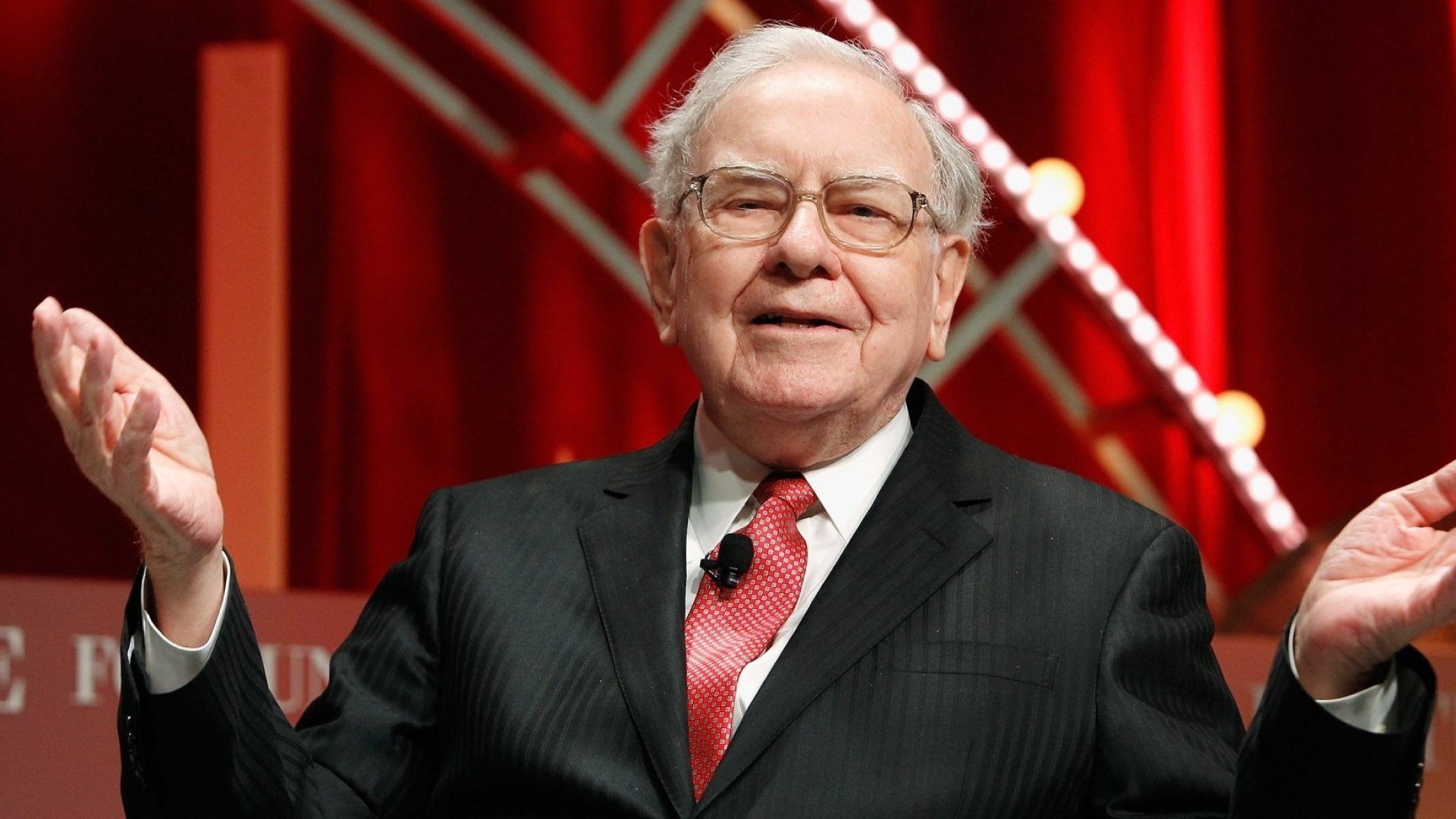

Warren Buffett popularized the concept of the "economic moat"—a structural advantage that protects a company's profits and fortifies its market position against competitors. He famously said, "We're trying to find a business with a wide and long-lasting moat around it, protecting a terrific economic castle."
Over decades, Buffett showed that businesses which stand the test of time are surrounded by unbreachable moats, whether through low-cost production, powerful brands, or unique customer relationships.

What is a brand moat—exactly as Buffett defines it?
A brand moat isn't a catchphrase. For Buffett, only durable, compounding advantages qualify. Moats reflect qualities competitors cannot easily replicate, advantages that withstand relentless attack over time. Classical examples include Coca-Cola's brand loyalty, GEICO's cost-leadership in insurance, and Apple's reputation for design-driven innovation.
Buffett's core lesson: The wider and more enduring the moat, the safer the economic castle.
Moats are built on durable advantages:
Low-cost producer. Outperforming competitors in operational efficiency so profits are protected even in price wars.
Proprietary brand. Commanding customer loyalty and premium pricing through trust, reputation, and emotional resonance.
Switching costs or network effects. Making it hard, expensive, or inefficient for customers to leave.
Intellectual property or regulatory protection. Owning patents, trade secrets, or having licenses others lack.
Buffett's prescription for leadership: Widen the moat. Build enduring competitive advantage. Delight your customers. Relentlessly fight costs.
Why most service businesses build moats that don't last
Many businesses believe their website is a "digital storefront." Buffett would say: A storefront isn't a moat. It's a commodity. Anyone can build a website. Moats only form when the website concretely advances defenses that competitors cannot cross.
Most agencies and service firms make two critical errors:
Competing on volume and speed. Positioning themselves as affordable, quick, and generic attracts price shoppers and dilutes reputation, which limits the opportunity to become a premium, trusted partner.
Failing to compound insight. Their websites and content regurgitate superficial advice that AI can easily replicate, rather than deep, proprietary solutions earned from client experience.
Shallow websites trap firms in tactical work, burn out talent, and reinforce the wrong reputation. The moat narrows, or worse, disappears.
Building a brand moat with strategic website design
A strategic website isn't decorative. It's an active engine for creating, defending, and widening your business moat.
1. Positioning that filters out the wrong clients from first contact
Moats start with conscious repulsion. Your site must make strategic buyers feel "finally, someone who gets it" while making tire-kickers feel "this isn't for me."
Clear messaging, articulated trade-offs ("We don't do quick fixes"), and proprietary frameworks filter out clients who would erode the brand's strength. According to research on attracting premium clients, positioning that naturally repels shallow buyers while attracting deep ones creates the foundation for sustainable competitive advantage.
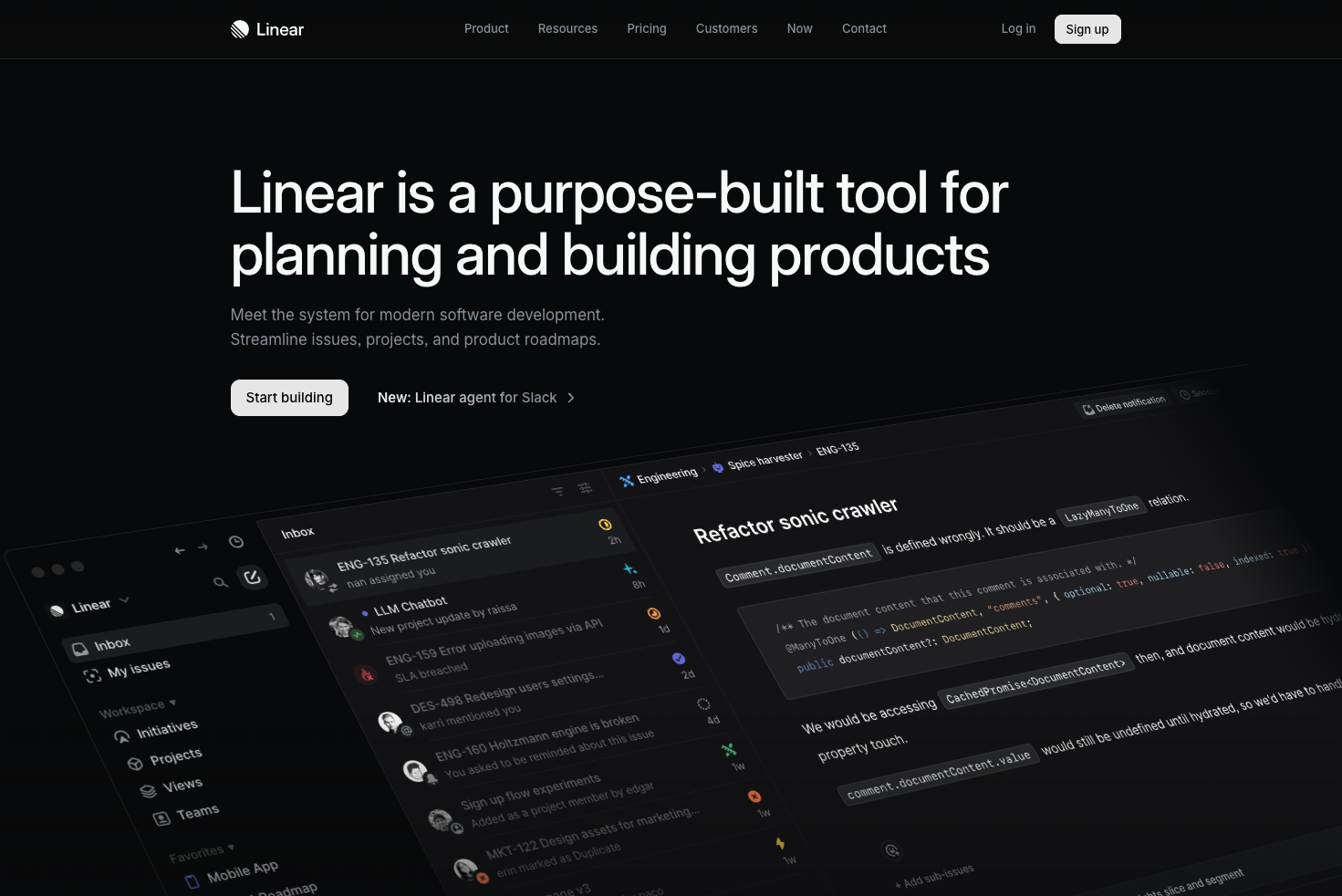
Linear's approach: Their website isn't for everyone. Keyboard-driven navigation, opinionated language, and bold design speak to high-performing product teams. This creates a moat that keeps shallow project buyers away but attracts believers.
2. Content that compounds proprietary knowledge
Buffett looks for unique, unreplicable assets. Your website must showcase content built from actual deep client work, not broad "listicles" for search engines. Proprietary frameworks, transformation stories, and intellectual property are the signals strategic buyers seek.
Research on competitive advantages shows that while AI can replicate generic advice instantly, accumulated insights from specific client engagements create advantages competitors cannot easily cross.
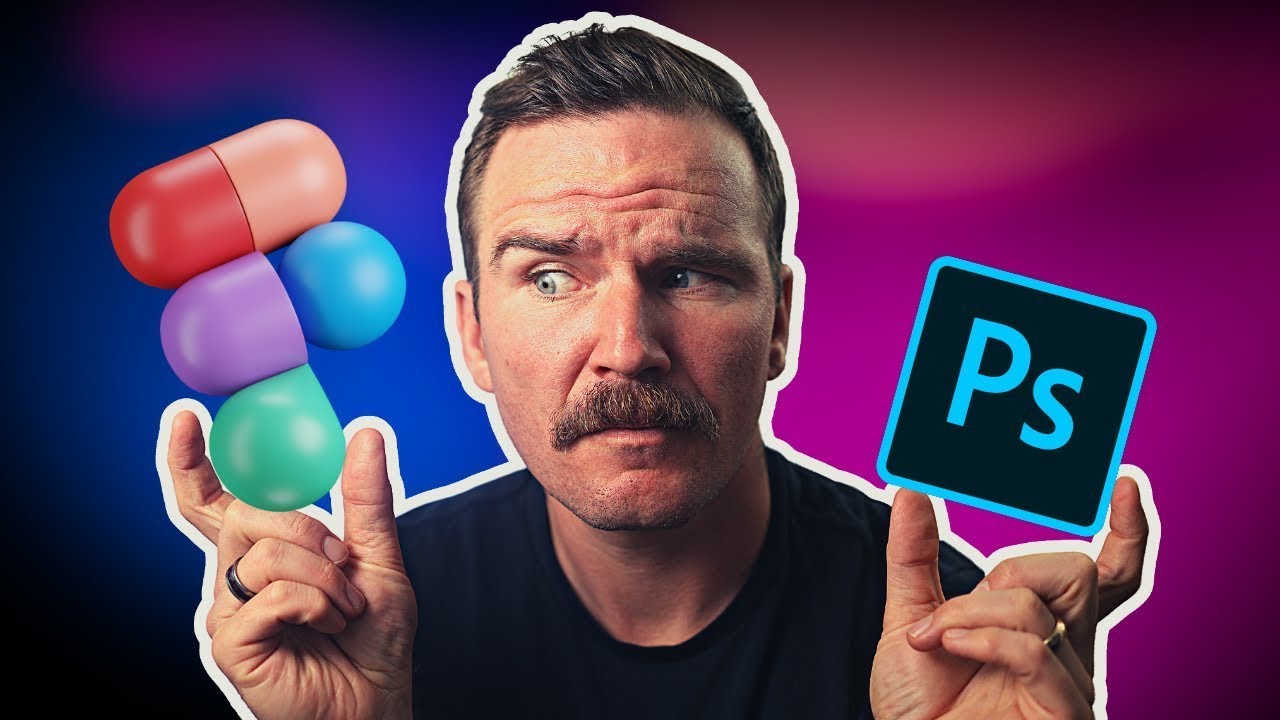
Figma's approach: Figma didn't win by listing features. It articulated a strategic vision for design-team collaboration, and its website and content consistently reinforced that moat, attracting forward-thinking designers who wanted to work differently.
3. Trust architecture that compounds over time
Moats are made wider by evidence of transformation, not promises. Showcase before-and-after results, social proof from respected industry figures, and detailed case studies that highlight strategic outcomes rather than generic "communication skills." The more specialized and accountable you are, the greater your brand moat.
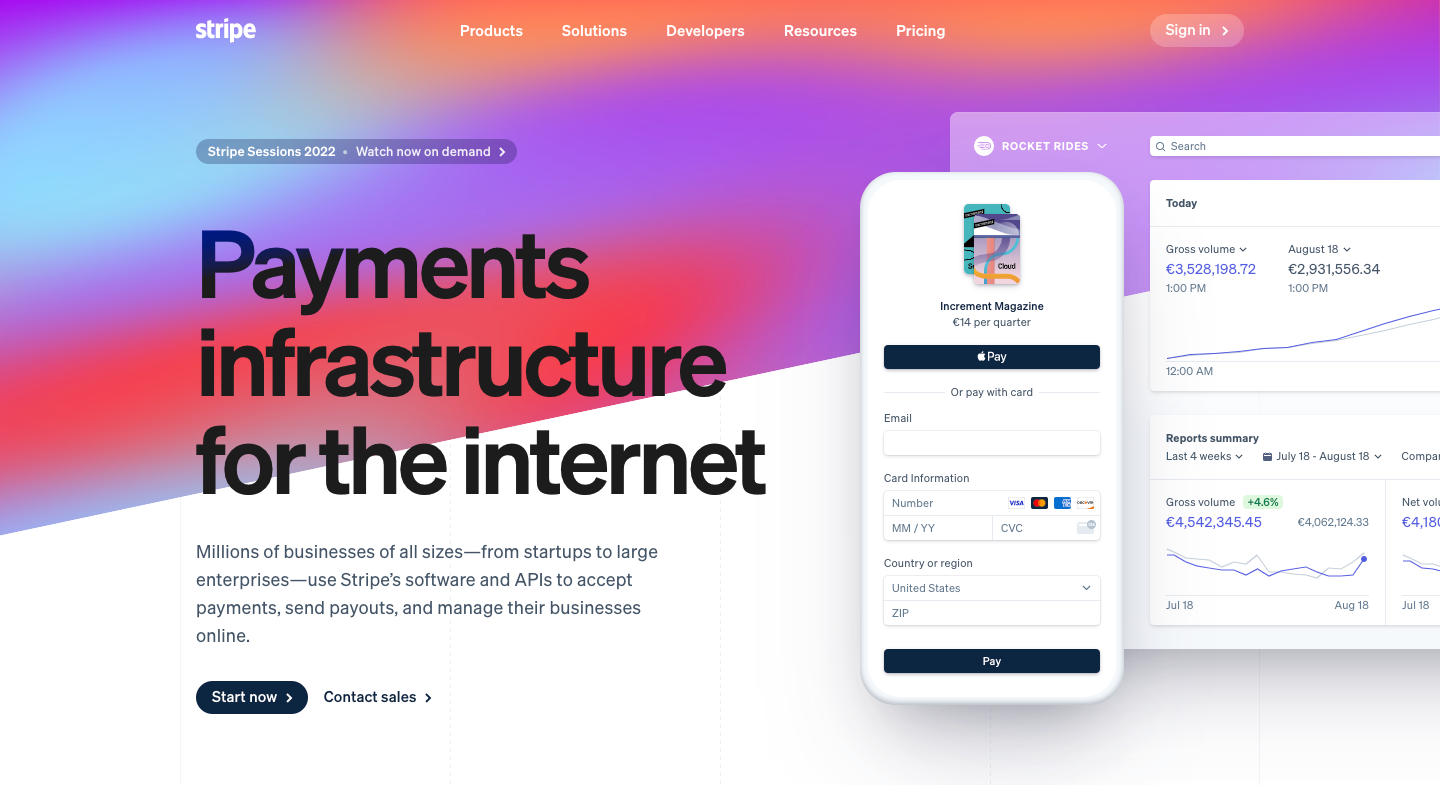
Stripe's approach: Stripe's website is built for developers. The clarity, precision, and technical depth speak directly to its target audience, creating a moat from understanding and trust that PayPal and others cannot cross.
4. Conversion systems optimized for fit, not volume
Buffett doesn't look for businesses that "turn over inventory quickly." He wants those that convert the right customers at a premium. Websites must use qualification systems (not just contact forms) that require investment by the visitor, reinforce premium positioning, and clarify who is not a fit.
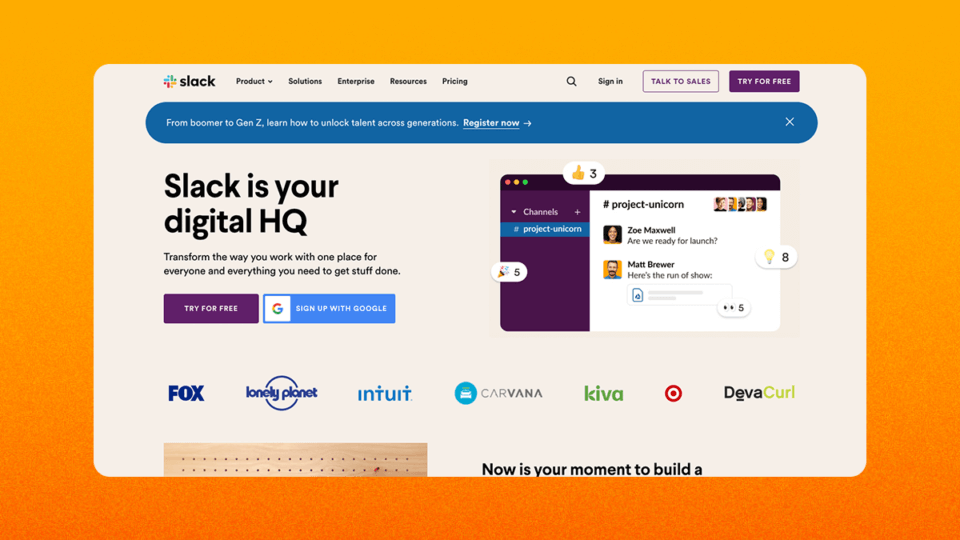
Slack's approach: Slack built a moat by not being generic. Their website positioned as "opinionated software for teams that work a certain way." This clarity is reflected in how prospects qualify themselves from the first page.
The compounding power of a brand moat in the digital era
Moats compound returns. When your website attracts and converts deep, strategic clients, you create virtuous cycles:
Better referrals. Strategic clients know peers who want similar transformation.
Stronger positioning. Each engagement further reinforces your reputation for depth, not volume.
Higher talent retention. All-star team members stay to do premium work.
Premium pricing. Deep moats support higher margins and reinvestment.
Buffett calls this "the daily imperceptible actions that, cumulatively, strengthen the business for decades." Your website either triggers this compounding, or prevents it from happening.
Building and widening your brand moat: Action steps
To truly build and widen your moat:
Design for strategic filtration, not mass appeal. Make premium buyers feel understood and average buyers self-select out. This isn't a flaw in your marketing. This is the entire strategy.
Showcase frameworks and case studies. Proprietary methods and transformation evidence increase switching costs for competitors. Generic advice is free everywhere. Your specific approach to specific problems is not.
Build trust by being specific. Show measurable results, respected testimonials, and clarity about who you best serve. Vague promises of "better outcomes" attract shallow buyers. Specific transformation stories attract strategic partners.
Engineer conversion for depth, not speed. Qualification is more valuable than a high volume of leads. A discovery process that requires investment filters for serious buyers while educating those who aren't ready yet.
Adopt Buffett's mindset to win the next decade
Buffett showed that moats are built by continuous, cumulative efforts, widening the gap between you and competitors every day. In branding and the digital era, your website is no different.
Focus on defensible, compounding advantages. Stand for something clear and valuable. Every element of your site (messaging, content, trust signals, and conversion) should serve to make your moat wider.
Building a brand moat isn't just about surviving. It's about thriving so fiercely that others can't compete.
Your website either builds this protection or leaves you exposed. Most service businesses have websites designed for volume and speed. Strategic businesses have websites designed to widen moats.
The difference compounds over time. Strategic buyers recognize the difference immediately.
The question: which side of this divide will your website be on when AI makes everything else commoditized?
Written by Hieu Vu with Perplexity and Claude AI
